For all ages. With particular care for children. Our Tanzania pilot is in development.
ROOTED IN CAREWe see you.GROWING TOGETHER
A thoughtful start. Our proposed first year
15people in the proposed pilot
6places in the farm pathway
$75,000first-year fundraising target
✳
Care begins with seeing the person.
THE HEART OF MBONI
When we see each other, possibility grows.
Mboni is inspired by the idea of sight: recognizing people whose needs too often go unnoticed. For us, seeing means listening, respecting each person’s choices, and turning care into practical help.
An everyday encounter. A question that stayed.
Gina Saulo’s memories of passing through Kariakoo inspired a vision: a community where people with disabilities can access the support and opportunities they choose.
More about our purpose
A question that stayed.
As a student in Tanzania, Gina Saulo travelled through Kariakoo and saw people with disabilities facing difficult barriers to everyday life.
One encounter with a wheelchair user selling small goods stayed with her. It prompted a question about what becomes possible when people can access the right support and opportunity.
That reflection is the starting point for Mboni Foundation.
OUR BELIEF
Disability should never mean being forgotten.
Every person deserves safety, choice and a place to belong. A person’s value is never measured by whether they can work.
From an idea to a practical beginning.
We are developing a small pilot in Dar es Salaam, bringing housing and essential support together with healthcare access, skills and an inclusive community farm. The plan begins with 15 people and local partnerships.
Our mission
To support people with disabilities experiencing homelessness and extreme poverty in Tanzania through safe housing, essential services, inclusive agriculture and opportunities for a more secure, self-directed life.
Our vision
Communities where people with disabilities have a safe place to belong, equal opportunities and meaningful control over their lives.
Led with dignity. Shaped together.
Participant choice, accessible communication, local knowledge and transparent decisions will guide the work. We aim to build support with people, respecting their interests and the lives they want to lead.
Support starts with being heard. Children, adults and older people have different needs. We build care around the person, working with families and caregivers where appropriate.
The proposed pilot includes housing assistance for up to 10 people and food and hygiene support for 15 people, based on individual assessment.
Safety, accessibility and continuity come first. Housing support may include rent, deposits or temporary accommodation, with a plan for what follows.
We plan to connect participants with qualified healthcare and rehabilitation providers and help address the practical barriers to attending appointments.
Assistive products will be assessed, fitted and supported appropriately. The pilot budgets for up to eight products or repairs, according to need.
Adult livelihood targets are provisional: up to nine adults in skills training, including up to six in farming, and up to four grants or tool packages. The final age mix and funded family support will determine capacity.
Training and paid work are voluntary. Essential care never depends on employment, productivity or business success.
Children receive individual assessments, appropriate healthcare and education referrals, and support to stay safely with families whenever possible. Trained partners, caregiver consent where lawful, and child assent suited to age and understanding are required.
Child enrollment starts only after the safeguarding team, referral pathways and funded support arrangements are ready. Children do not take part in productive or paid farm work.
GROWING OPPORTUNITY TOGETHER
Good things grow when we grow together.
A place to learn, contribute and belong.
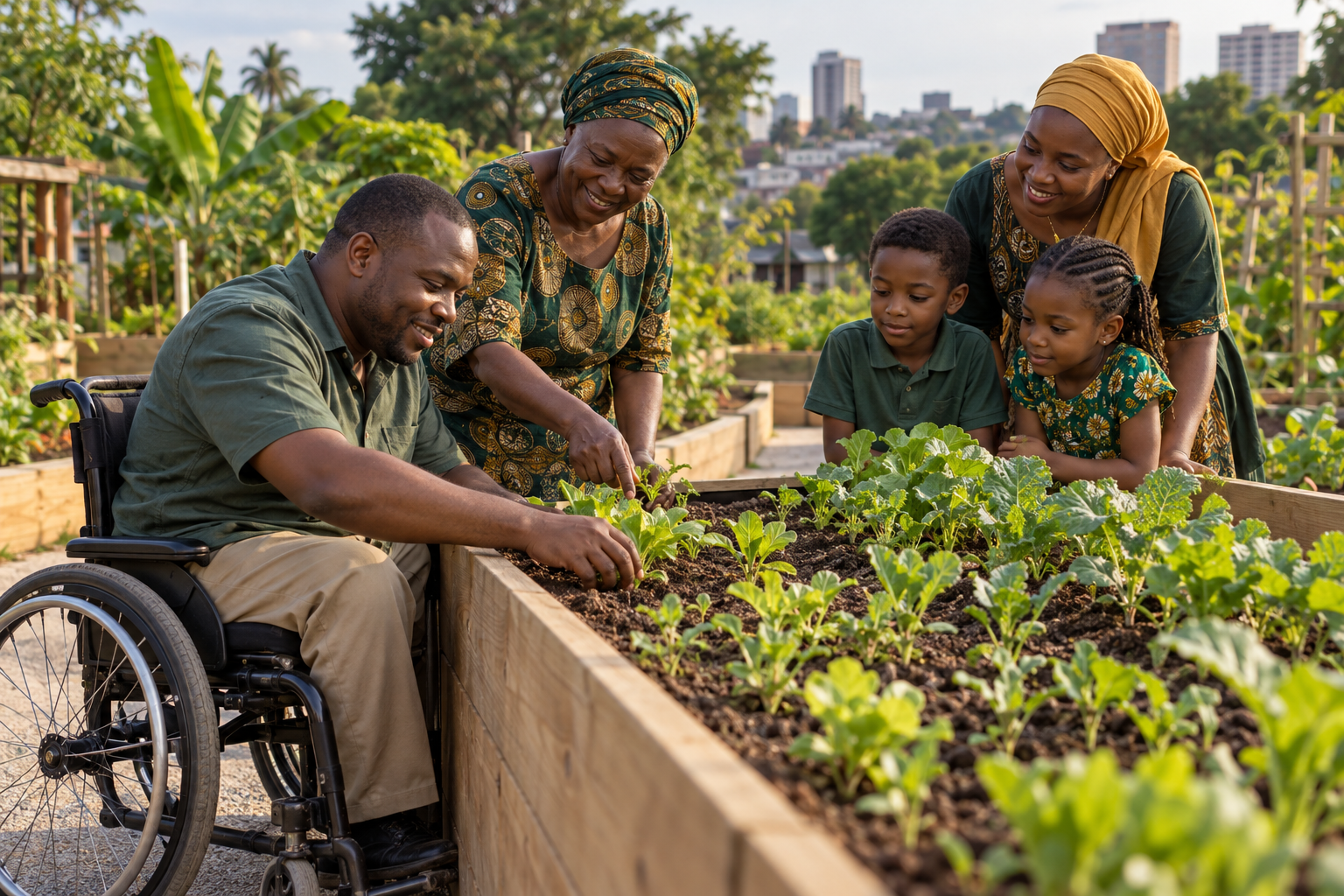
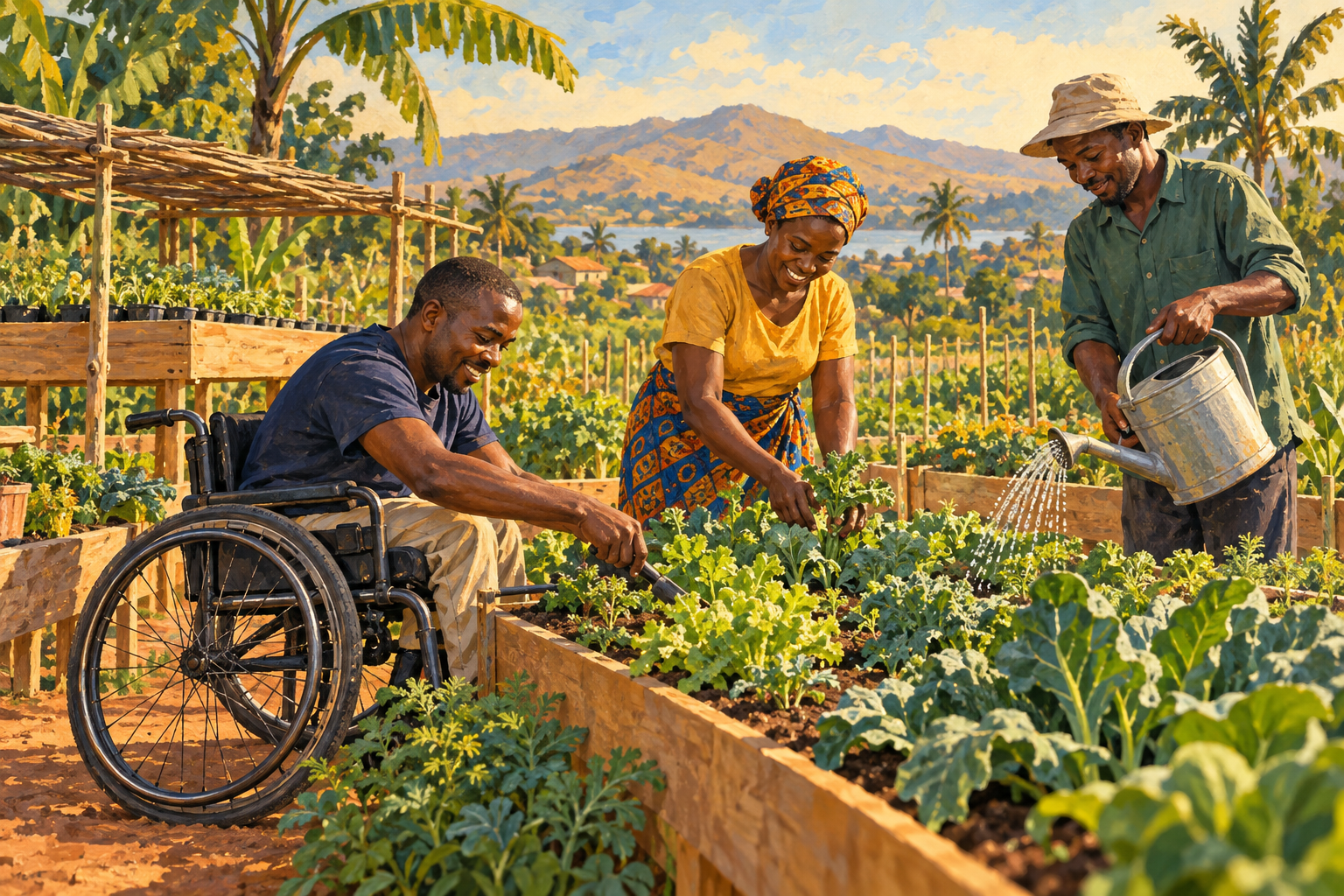
Our planned shared garden will bring accessible growing spaces and meaningful roles to a small group of participants—from nurturing seedlings to packing produce and supporting sales.
Fresh food for households. Practical skills for the future. Community at the heart of it all.
200–400 m²Partner-hosted growing space6 placesVoluntary farm pathway$9,000Included in the pilot budget
Adult livelihoods and family nutrition are central to the farm. Children may join supervised, age-appropriate learning only after a safety assessment, with no productive work, machinery or chemical handling.
Accessible beds, adapted tools and roles from seedling care to packing and sales. Essential support never depends on farm work.
How the farm will work
Start small. Grow with care.
Our proposed farm begins with a 200–400 square metre plot at an existing partner site. Up to six interested adults from the wider pilot can choose to take part.
Raised or container beds, adapted tools, seated work areas and accessible facilities will help make growing more inclusive. The site must pass land, water and safety checks before opening.
THE FIRST FARM
Up to 6 adults. Many ways to contribute.
Nurturing seedlings and planting
Light watering and harvesting
Grading and packing produce
Recording stock and taking orders
Helping with local sales
Food for households. Skills for tomorrow.
The starting plan allocates half of the safe, marketable harvest to participating households and the support program, with up to half available for local sales trials. Participants will help review this approach as the farm develops.
Productive paid work will have agreed hours and lawful pay. Food shares and essential services will not depend on a person’s attendance or output. Sales will support approved farm costs; the first-year budget does not rely on them.
A practical $9,000 start.
The farm allocation is included in the $75,000 pilot target.
Farm investment
USD
Shared site & accessibility
$2,100
Water, seeds & inputs
$2,100
Agriculture supervision
$2,000
Paid participant work
$1,200
Transport, testing, packing & maintenance
$1,600
Total farm allocation
$9,000
Will the farm feed everyone in the pilot?
It is intended to supplement household food, not replace regular food assistance. Harvests depend on the site, season and growing conditions. We do not promise specific yields.
Does everyone have to farm?
No. Participation is voluntary, and roles will reflect each person’s interests. People receive essential support independently of whether they can or want to work.
Can a grower or business become a partner?
Yes, we welcome conversations about accessible land, appropriate supplies, agricultural knowledge and potential produce markets. All partnerships require review. Tell us how you could contribute.
A CLEAR PLAN. AN HONEST BEGINNING.
Big on care. Clear on our commitments.
A small pilot. A wider welcome.
The foundation serves all ages, with particular attention to children. The $75,000 target and 15-person capacity remain planning limits. The age mix, family support costs and adult livelihood targets must be validated before enrollment; the wider scope does not add unfunded places.
$75,000 for the first year.
The revised plan is 53.7% smaller than the earlier $162,000 proposal. It focuses on 15 people, shared local facilities and one small community farm.
92% of the target supports operations, including the farm and contingency.
HOW THE TARGET IS ALLOCATED
$69,000
Operating budget, including the community farm and contingency.
$6,000
Protected continuity reserve.
92% operations8% reserve
What the first year aims to do.
Support 15 people through individual plans
Provide housing assistance for up to 10
Offer a farm pathway for up to 6 adults
Offer skills training to up to 9 adults, subject to cohort mix
Support 4 suitable livelihood ideas
Review and report progress honestly
These groups overlap. They must not be added together as separate beneficiaries. Costs and targets remain subject to local validation.
View the complete first-year budget
Cost category
USD
Shared program lead
$6,000
Caseworker
$9,000
Finance & administration
$2,400
Housing assistance
$9,000
Food & hygiene
$4,800
Healthcare & rehabilitation
$3,750
Assistive products & repairs
$2,400
Accessible transport
$3,000
Supplementary skills training
$1,800
Enterprise grants & tools
$2,400
Access & participant advisers
$1,200
Shared office & communications
$1,200
Legal & financial compliance
$4,500
Insurance & safeguarding training
$2,400
Monitoring & evaluation
$1,200
Fundraising & website
$900
Transfer & payment costs
$800
Community farm
$9,000
Operating contingency
$3,250
Operating total
$69,000
Continuity reserve
$6,000
Cash target
$75,000
Before the first participant enrolls.
The plan requires verified local partners, lawful operating arrangements, trained staff, safeguarding procedures and enough available funding to protect continuity. We will not count unconfirmed pledges or future produce sales as money available for essential care.
Our current status
The Tanzania pilot is in development for people of all ages, with particular attention to children. Donations and participant enrollment are not open through this website. Registration, tax status and partner appointments will be published once confirmed; no tax-deductibility claim is made here.
What we will share
Once work begins, updates will distinguish targets from results and report spending, participation and progress in aggregate. Participant names, health records and personal circumstances will not be shared without appropriate consent.
Let’s explore how your organization could support the pilot.
Online donations are not yet open.
For giving inquiries, write to info@mboni.org. No payments are collected here.
CARE AND ACCOUNTABILITY
Built on trust.
Privacy
Email inquiries
The inquiry forms prepare a draft using your email application. They do not submit or store the contents through this website. Nothing is sent until you send the draft in your email app. Emails you send may include your name, email address and message.
We will use inquiry information to respond and discuss the subject you contacted us about. Do not send sensitive health information, identity documents or confidential case details through these forms.
Website services
The hosting service may process technical information, such as IP addresses and request details, to operate and secure the site. The site loads fonts from Google Fonts, which receives the browser requests needed to supply those files. No advertising analytics, newsletter signup or payment processing has been added.
Your choices
You can contact info@mboni.org about an inquiry you have sent, including a request to correct or delete information. Any records needed to meet applicable obligations may need to be retained.
This page will be updated before adding new data collection, payment or participant intake services. Updated 30 September 2026.
Safeguarding
Our commitments
Essential support must never depend on favors, relationships, publicity or participation in work.
Participants choose whether their stories or images can be shared.
Concerns must be heard without retaliation.
People have the right to accessible communication and meaningful choice.
Raise a concern
For a concern related to the foundation, email info@mboni.org with a brief request for a confidential conversation. Avoid identifying sensitive circumstances in the initial message.
A dedicated safeguarding lead and independent escalation contact must be confirmed before participant enrollment. This general inbox is not a substitute for an emergency response or an independent reporting route.
Immediate danger
Contact appropriate local emergency or protection services. This website and its email address are not monitored emergency services.
Before operations begin
The launch plan requires trained staff, partner checks, reporting procedures, lawful data handling and accessible complaints channels. These arrangements must be ready before delivery starts.
Children and families
Before serving children, appoint a trained child-safeguarding lead, verify staff and volunteer suitability, agree qualified local referral partners, and establish confidential reporting. Use caregiver consent where lawful and child assent appropriate to age and understanding. No unsupervised volunteer access, exploitative imagery or separation from family for program convenience. Protection decisions require qualified local assessment.
Accessibility
Using this website
The website includes keyboard-operable navigation, visible focus, labeled fields, text alternatives for meaningful images and a layout that adapts to smaller screens. You can enlarge text using your browser controls.
Information is available as text rather than only inside images. The contact form prepares an email draft; if that does not work with your setup, email us directly.
Tell us about a barrier
Email info@mboni.org and describe the page, what you were trying to do and the difficulty you encountered. Share only the device or assistive-technology details you are comfortable providing.
We have not claimed independent accessibility certification. We will review feedback and improve the experience as the foundation develops.